
Tooling and machine components exposed to repeated sliding, contact or cyclic loading need more than a high surface-hardness figure. The case structure, compound layer, diffusion zone, core properties and final dimensions must work together for the component’s operating conditions.
Alpha Detroit provides gas nitriding for Clayton engineering businesses, toolmakers and manufacturers. Our controlled process incorporates a diffusion stage designed to manage the detrimental effects associated with an excessive conventional white layer.
Gas Nitriding Furnace Capabilities
| Specification | Published Capability |
| Nitriding furnaces | Two |
| Maximum component diameter | 850 mm |
| Maximum furnace depth | 1,980 mm |
| Atmosphere | Controlled gas atmosphere |
| Process stage | Controlled diffusion stage |
| Published process objective | Management of the detrimental conventional white layer |
| Case and tolerance requirements | Reviewed against the steel grade, drawing, target hardness, specified depth and inspection method |
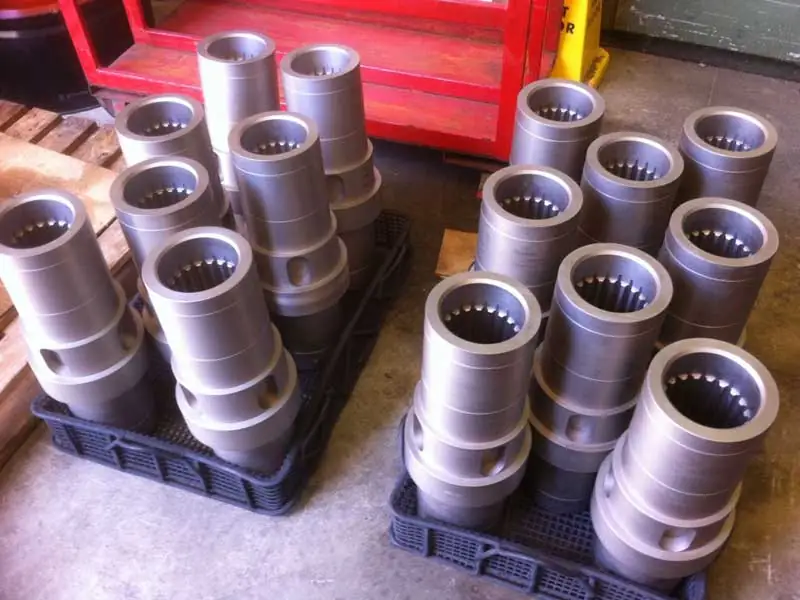
Why Gas Nitriding Is Used for Precision Components
Gas nitriding introduces nitrogen into the surface of a suitable ferrous material. The resulting nitrided case can improve surface hardness, wear resistance and fatigue performance without relying on the same rapid quench used by many conventional hardening processes.
That does not make nitriding distortion-free or suitable for every steel. Material selection, prior heat treatment, residual stress, surface condition, component geometry and support during processing can all influence the final result.
Compound Layer and Diffusion Zone Requirements
The outer compound layer and the supporting diffusion zone perform different jobs. A thick compound layer is not automatically better: excessive or unsuitable structure can create brittleness or finishing problems for particular applications. The required layer condition should come from the engineering specification and intended contact environment.
Alpha Detroit’s standard process includes a controlled diffusion stage. The target case depth, hardness profile and compound-layer requirement must still be nominated or agreed before production processing.
Components We Can Assess
- Tool-steel punches and forming tools
- Gears, shafts and wear-critical machine components
- Injection mould and extrusion-die components
- Parts exposed to sliding wear or galling
- Long components within the published furnace depth
- Repeat batches requiring a documented treatment specification
Preparing Components for Nitriding
Surface condition affects nitrogen transfer and the final case. Components should arrive clean and free from coatings, scale or contamination that could interfere with the treatment. Confirm whether masking, selective nitriding, post-treatment polishing or dimensional verification is required.
Critical dimensions, hardness ranges, case-depth tolerances and test locations should be marked on the drawing. Do not rely on a generic instruction such as “nitride hard” because it does not define an acceptable metallurgical outcome.
Information Required for Quotation
- Steel grade, condition and previous heat treatment
- Component drawing, diameter, length and batch quantity
- Required surface hardness and case depth
- Compound-layer or white-layer requirement
- Areas requiring masking or selective treatment
- Dimensional tolerances and finishing allowance
- Inspection, testing and reporting requirements
Gas Nitriding for the Clayton Engineering Corridor
Clayton and the wider Monash corridor support engineering, research, toolmaking and advanced manufacturing operations. Alpha Detroit services businesses in this corridor from its Moorabbin heat-treatment facility. The Clayton service area in the schema must not be presented as a second physical address.
Request a Technical Assessment
Send us your drawing, steel grade, target hardness, case-depth requirement and batch quantity for a gas-nitriding technical assessment.
Alpha Detroit supports engineering, manufacturing and industrial businesses in Clayton from our facilities at 8 and 14–16 Independence Street, Moorabbin. All services and component processing are carried out at our Moorabbin facilities; Alpha Detroit does not operate a physical branch in Clayton. Contact our team to discuss your specifications, component dimensions and delivery requirements.