
Manage Vacuum Heat Treatment Distortion with Alpha Detroit in Melbourne through drawing review, quench selection and process planning for precision parts.
For precision components, distortion risk should be assessed before heat treatment begins. At Alpha Detroit, we review the material, geometry, critical dimensions and required result so the processing route can be matched to the component rather than relying on a blanket tolerance promise.
Why Vacuum Heat Treatment Distortion Starts Before the Furnace
Vacuum processing can limit oxidation and support-controlled heating and quenching, but it cannot remove every cause of dimensional movement. Residual machining stress, abrupt section changes, uneven wall thickness, material condition and quench severity can all influence the final shape of a component.
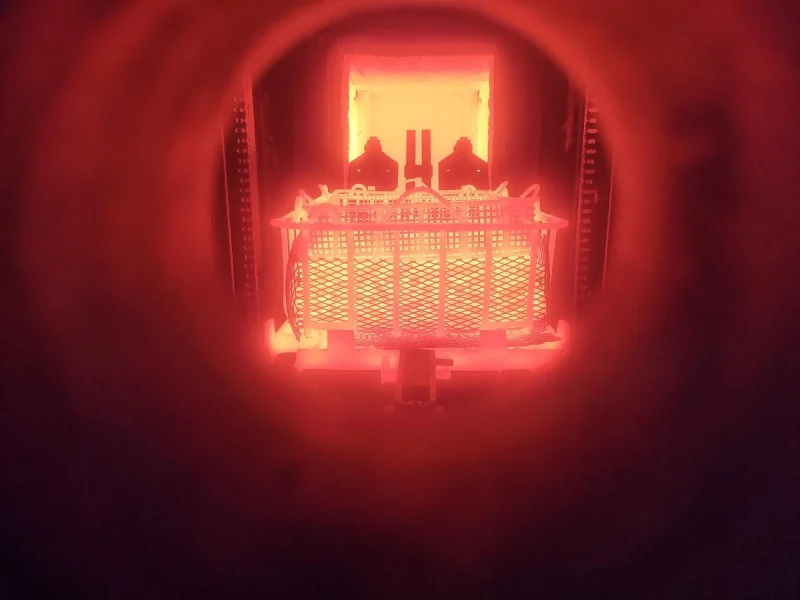
Our vacuum heat treatment service in Melbourne uses two vacuum furnaces at our Moorabbin facilities. Alpha Detroit publishes a maximum furnace envelope of 1,000 mm long, 610 mm wide and 760 mm high, with oil and fan-forced gas quenching available through our three-chamber furnace.
That capability gives us more than one processing route, but quench selection still depends on the steel grade, hardenability, section thickness, geometry and specified properties.
What We Need Before Assessing Distortion Risk
A useful technical review starts with complete job information. Before processing, we may need:
- Material grade and condition: Provide the steel designation, starting condition and material certificate where available.
- Fully dimensioned drawing: Mark datum surfaces, critical dimensions and any specified distortion limits.
- Component details: Confirm overall dimensions, section thicknesses, quantity and unit weight.
- Required result: State the treatment specification, target hardness and any inspection or reporting requirements.
- Finishing allowance: Identify surfaces that will be ground, machined or polished after heat treatment.
These details help us assess whether the component suits the furnace envelope, identify dimensional risk and discuss practical loading or quench options before the batch is accepted.
Managing Distortion Through Process Selection
Vacuum Heat Treatment Distortion is influenced by more than furnace atmosphere, with heating rate, soak temperature, load arrangement and quench route all playing a role. Gas quenching can produce a different distortion profile from oil quenching, but it is not automatically the better choice. The quench method must still achieve the required metallurgical result for the specific alloy and section size.
Our article on vacuum processing of high-speed steels explains why temperature and soak control matter when treating alloys sensitive to grain growth. The same principle applies more broadly: process settings must suit the material rather than being chosen only to minimise movement.
The ISO 20431:2023 heat-treatment quality-control standard sets out quality requirements and recommendations for industrial heat treatment and provides a framework for auditing and process control. It does not replace the customer drawing or job specification, which remain central to acceptance criteria for each component.
Reduce Avoidable Risk Before You Request a Quote
For precision work, Vacuum Heat Treatment Distortion should be considered early alongside hardness, surface condition, finishing stock and inspection requirements. Alpha Detroit supports manufacturers, toolmakers and engineering businesses from our Moorabbin heat-treatment facilities. We assess each job against the material, dimensions, required properties and equipment capacity.
Send our team your drawing and treatment requirements with the material grade, starting condition, batch details and required result. We can review the component, discuss the available processing route and provide a quote based on the actual job requirements.
Optimized by: Netwizard SEO