
Hallam’s engineering and industrial businesses handle hydraulic equipment, conveyors, mobile plant and production machinery. Shafts, rollers, pins and axles from these applications commonly need a hard wear surface while retaining a supporting core.
Alpha Detroit provides induction hardening for Hallam businesses from its Moorabbin heat-treatment facilities. The service is suited to shafts, rollers and hydraulic components when the material, geometry and required performance support the selected process.
Induction Hardening Capacity
| Specification | Published Capability |
| Equipment | Vertical induction scanner |
| Maximum component diameter | 175 mm |
| Maximum component length | 1,800 mm |
| Published hardness depth | Up to 15 mm, subject to material, geometry and process feasibility |
| Typical published components | Pins, axles, shafts and rollers |
| Pattern and tolerance | Drawing-specific; mark hardened zones, transition areas, datum surfaces, machining allowance and inspection locations |
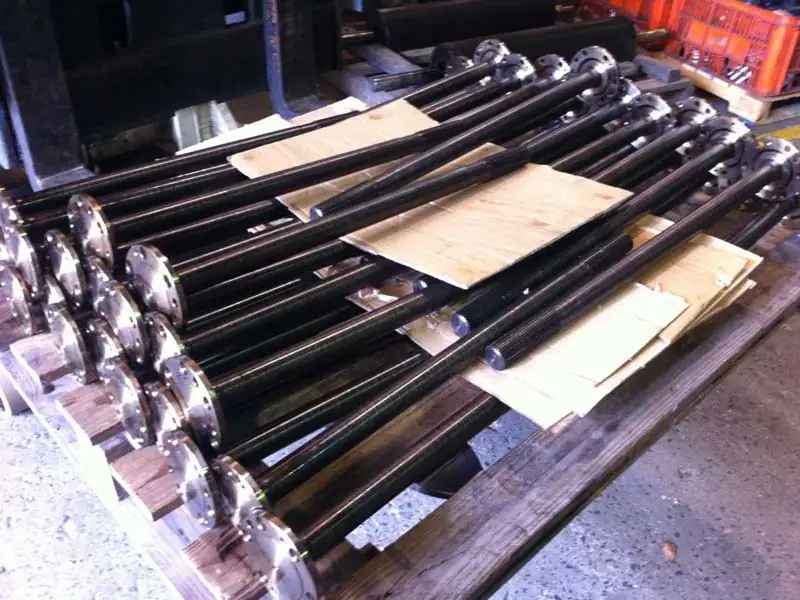
Selective Hardening for Wear-Critical Surfaces
Induction hardening concentrates heating in a defined surface zone before quenching. For suitable steels and geometries, this can produce a hardened wear surface while retaining a tougher core and leaving nominated areas untreated.
The hardened pattern must be engineered, not guessed. Coil access, power density, scan rate, coupling distance, material chemistry and prior condition influence the result. Shoulders, diameter changes, holes and thin sections can affect heat flow and transition-zone behaviour.
Induction Hardening Applications for Hallam
- Hydraulic cylinder rods and pins where material is suitable
- Conveyor and drive rollers
- Machine shafts and axles
- Repair components with clearly defined wear tracks
Depth, Pattern and Dimensional Requirements
Alpha Detroit publishes hardness depths up to 15 mm, with maximum component dimensions of 175 mm diameter and 1,800 mm length. These are capacity limits, not a guarantee that every component can achieve the maximum depth.
Show start and stop positions, required depth definition, surface-hardness range, transition allowance and test locations on the drawing. Nominate straightness, run-out, grinding stock or other critical tolerances before processing.
Information Required for Assessment
- Material grade, carbon content and prior heat treatment
- Component drawing, diameter, length and weight
- Hardened-zone start and stop positions
- Target hardness and required depth definition
- Areas that must remain soft
- Straightness, run-out, finishing stock and inspection requirements
Servicing Hallam from Moorabbin
Jobs from Hallam are processed at the Moorabbin plant. Long components must be checked against the 1,800 mm scanner limit, including any centres, fixtures or handling allowance relevant to processing.
This page describes an area served. Alpha Detroit does not claim a physical workshop or branch in Hallam. All quotes should identify the Moorabbin processing address and the actual customer delivery arrangement.
Request a Technical Assessment
Send the shaft or component drawing, material grade, hardened-zone pattern, target depth and tolerances for an induction-hardening review.
Alpha Detroit supports engineering, manufacturing and industrial businesses in Hallam from our facilities at 8 and 14–16 Independence Street, Moorabbin. All services and component processing are carried out at our Moorabbin facilities; Alpha Detroit does not operate a physical branch in Hallam. Contact our team to discuss your specifications, component dimensions and delivery requirements.