
Thomastown has a broad base of heavy engineering, fabrication, recycling, transport and machinery businesses. Large gears, rolls, sheaves and equipment components may need selective hardening when replacement cost or component size makes another route impractical.
Alpha Detroit provides flame hardening for Thomastown businesses from its Moorabbin heat-treatment facilities. The service is suited to heavy machinery, gears and large wear surfaces when the material, geometry and required performance support the selected process.
Flame Hardening Capacity
| Specification | Published Capability |
| Maximum published roll diameter | 1,000 mm |
| Maximum lifting capacity | 20 tonnes |
| Published methods | Full or partial groove hardening, spin hardening and progressive hardening where suitable |
| Typical published components | Rolls, shafts, sheaves, rope drums, slew rings, machine ways, rails, dies, moulds, gears, sprockets and racks |
| Published materials | Alloy and plain-carbon steels, ductile iron, cast iron and selected stainless steels |
| Depth and tolerance | Component-specific; define target hardness, hardened depth, pattern boundaries, distortion limits and inspection method on the drawing |
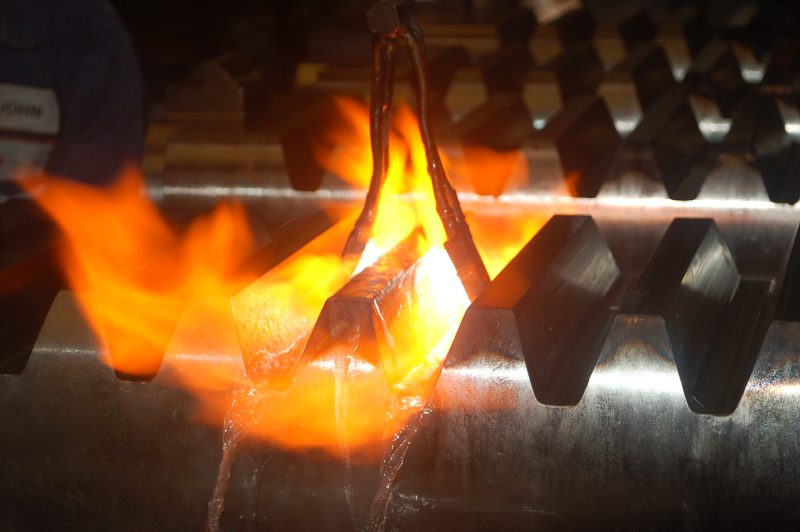

When Flame Hardening Is the Practical Route
Flame hardening can be practical for large or awkward components that need hardness only on defined wear surfaces. The process can retain useful core strength and reduce unnecessary thermal exposure outside the working zone when the material and geometry are suitable.
It is not automatically suitable for every casting or steel. Carbon content, hardenability, section thickness, previous repairs and existing cracks must be considered before a treatment pattern is approved.
Flame Hardening Applications for Thomastown
- Large gears, sprockets and racks
- Rolls and shafts within handling limits
- Sheaves, rope drums and bearing tracks
- Machine ways, rails and selected wear faces
Hardening Pattern, Depth and Inspection
Alpha Detroit publishes capability for rolls up to 1,000 mm diameter and lifting capacity to 20 tonnes. Full or partial groove treatment, spin hardening and progressive hardening can be considered where component access and geometry allow.
Mark the required wear track, untreated areas, transition zones and inspection points on the drawing. Target hardness, depth definition and dimensional tolerance must be confirmed for the actual material rather than copied from an unrelated component.
Information Required for Assessment
- Material grade, casting specification and prior heat treatment
- Drawing, component weight and overall dimensions
- Marked flame-hardening pattern and soft areas
- Target hardness and required depth
- Known cracks, weld repairs or previous rework
- Machining allowance, distortion limits and inspection criteria
Servicing Thomastown from Moorabbin
Components are treated at Moorabbin, not Thomastown. Confirm truck access, component weight, lifting points and safe handling arrangements with Alpha Detroit before transporting large parts.
This page describes an area served. Alpha Detroit does not claim a physical workshop or branch in Thomastown. All quotes should identify the Moorabbin processing address and the actual customer delivery arrangement.
Request a Technical Assessment
Send the component drawing, material specification, weight, wear pattern and hardness requirements for a flame-hardening suitability review.
Alpha Detroit supports engineering, manufacturing and industrial businesses in Thomastown from our facilities at 8 and 14–16 Independence Street, Moorabbin. All services and component processing are carried out at our Moorabbin facilities; Alpha Detroit does not operate a physical branch in Thomastown. Contact our team to discuss your specifications, component dimensions and delivery requirements.