
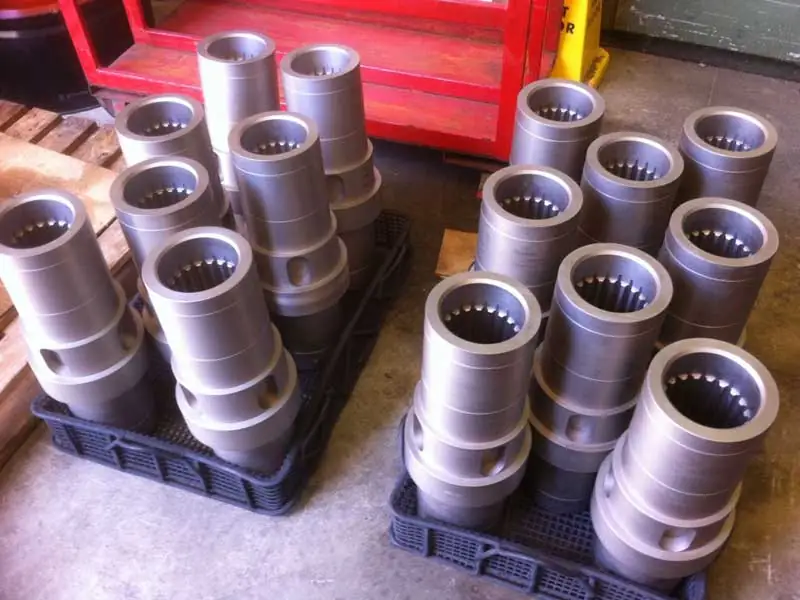
Improve tool life by managing compound layer thickness at Alpha Detroit. Our Melbourne facility delivers superior galling resistance for B2B clients.
Surface performance influences how reliably industrial components operate under repeated contact. Compound layer thickness affects how nitride parts handle friction, wear, and surface fatigue in service. Careful process control supports consistent results suited to real-world operating conditions.
Controlled Compound Layer Thickness in Melbourne Industrial Settings
Maintaining the correct compound layer thickness depends on controlled nitriding parameters such as temperature range, treatment time, and gas balance. Excessive growth can increase brittleness, while insufficient formation may limit wear resistance under load. Industrial operations in Melbourne rely on consistent processing to support predictable component performance.
Uniformity across the treated surface contributes to stable operation over time. Variations in the compound layer can create uneven contact behaviour, which may lead to premature wear in high-load environments. A controlled process helps reduce these risks and supports more reliable service outcomes.
Strategies for Improving Galling Resistance in Melbourne
Surface engineering involves altering the chemical composition of the outer surface to lower the coefficient of friction. Following these established parameters ensures smoother mechanical interactions between moving metal parts:
- Temperature consistency: Maintains stable diffusion conditions throughout the cycle, supporting even compound layer formation and reducing the risk of localised hardness variation.
- Gas composition control: Regulates nitrogen potential to influence surface chemistry, helping achieve a balanced layer without excessive porosity or brittleness.
- Surface condition: Proper cleaning and preparation remove oxides and contaminants, allowing the compound layer to form uniformly across all contact surfaces.
- Treatment duration: Aligns exposure time with the required surface characteristics, ensuring sufficient hardness without promoting excessive compound layer growth.
- Cooling stability: Controls post-process cooling rates to preserve dimensional accuracy and minimise distortion in precision components.
Improving Wear Resistance Through Controlled Layer Formation
Balanced compound layer thickness contributes to improved resistance against adhesive wear and galling during operation. A stable surface condition reduces the likelihood of material transfer between contacting components, which supports smoother interaction under load.
Australian manufacturing practices emphasise controlled heat treatment processes to support safe and consistent outcomes. At Alpha Detroit, we align nitriding procedures with recognised industry expectations to maintain surface integrity and functional reliability. This approach reflects practical requirements rather than theoretical performance.
Consistent Nitriding Outcomes for Industrial Applications
Effective surface treatment supports longer service intervals and more stable component behaviour in demanding environments. Controlled nitriding contributes to reduced wear while maintaining the base material’s structural properties.
Alpha Detroit ensures that every component reaches the exact compound layer thickness required for its specific operational environment.
Our team uses advanced nitriding techniques to eliminate the risks of galling and premature surface fatigue in local manufacturing.
Contact us to support reliable surface treatment outcomes for your industrial components.
Related Blog Articles:
Vacuum Heat Treatment for Stainless Tooling: Decarb-Free Finishes Explained
Induction Heat Treatment for Application-Specific Hardening Solutions
Carbonitriding for Heavy-Duty Uptime: Wear-Hardening Automotive and Mining Parts
How Induction Hardening Delivers Precision Hardness Profiles in Shafts and Gears
Optimized by: Netwizard SEO