
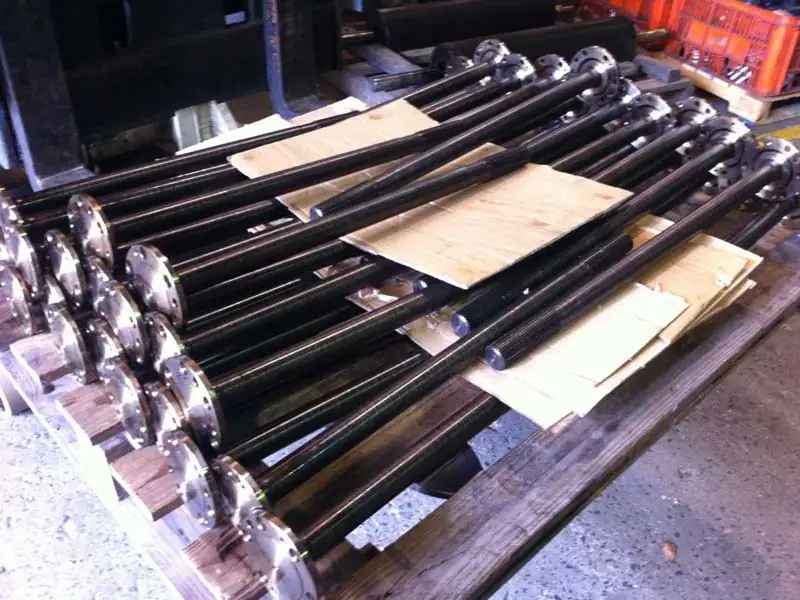
Achieve stronger medium-carbon steel performance through induction hardening with Alpha Detroit in Melbourne delivering reliable industrial results.
Medium-carbon steels provide engineers with reliable strength and balanced ductility required for complex mechanical systems. Their response to induction hardening defines surface durability, case strength, and long-term performance across high-load components. Metallurgical changes during rapid heating and cooling shape the behaviour of the hardened surface and influence how the steel performs in precision applications.
Microstructure Development in Medium-Carbon Steel Heating Cycles
Thermal behaviour in medium-carbon steels depends on controlled heating conditions, alloying content, and the structure produced during earlier processing stages. Surface regions heated above the austenitising point form austenite that transforms to a hard martensitic layer after quenching. This rapid transformation strengthens the outer case while maintaining a tougher, more ductile core.
Case formation varies according to steel cleanliness, grain refinement, transformation kinetics, and the consistency of the heat source. Dimensional accuracy remains stable when heating depth remains controlled, which ensures the correct hardness gradient for service conditions.
Parameters Governing Optimal Induction Hardening
Successful surface heat treatment depends on correctly adjusting electrical, thermal, and mechanical settings. Getting consistent results requires knowing how these factors influence the material during induction hardening.
Process variables and their Influence:
• Frequency Selection: This sets the depth of current flow. It directly controls how deep the hardened case will be.
• Power Density: This is the electrical energy delivered per surface area. It determines the heating speed and the final peak temperature.
• Austenitisation Time: A specific time is needed to dissolve all carbon into the austenite. This must happen without causing the steel grains to grow too large.
• Quench Medium: This factor influences the rate of cooling; faster quenches, such as those using polymer solutions, yield the material’s maximum achievable hardness.
• Initial Microstructure: The steel’s existing condition, like being normalised or spheroidised, changes how fast the transformation occurs.
Achieving Precision Case Depth and Hardness
The process mandates creating a uniform, defect-free martensitic layer with precise dimensions and hardness. Strict parameter control is essential to mitigate flaws like cracking and case depth variation, which compromise component integrity.
Critical quality metrics include:
• Case Depth Uniformity: Consistency across the part ensures reliable and predictable load-bearing ability.
• Martensite Formation: This confirms the surface layer reached maximum hardness. This is achieved because of the ultra-fast cooling after the induction hardening cycle.
• Residual Stress State: The process ideally produces beneficial compressive stress in the hardened case. This greatly improves the component’s fatigue life and resistance to cracks.
• Hardness Profile: A detailed measurement tracks hardness from the surface inward. This confirms the sharp transition zone between the hard case and the core.
• Torsional Strength: The overall strength is boosted by this perfect blend. It combines a highly resistant case with a ductile core.
For a technical analysis of how the system design influences process control, review the The Design of a System for the Induction Hardening of Steels Using Simulation Parameters
Trusted Hardening Solutions for High-Performance Parts
Medium-carbon steels respond predictably to controlled thermal treatment, delivering a hardened surface capable of long-term performance in demanding assemblies.
Our precision-driven induction hardening at Alpha Detroit ensures stable dimensions, improved wear resistance, and reliable operation across complex mechanical systems. We apply deep metallurgical and advanced hardening expertise to support manufacturers seeking consistent, high-quality outcomes for critical components.
For project-specific hardening requirements or technical guidance, contact us today for expert support.
Related Blog Article: How Induction Hardening Delivers Precision Hardness Profiles in Shafts and Gears
Optimized by: Netwizard SEO